
The Quantum Leap That Rewrites the CPU Rulebook
The CPU ruled computing as its undisputed brain for decades. Its architecture dictated our understanding of processing muscle, memory ladders, and computational velocity. That reign is crumbling. A radical new generation of hybrid chips—melding quantum mechanics with artificial intelligence—is obliterating conventional processor design principles. These aren’t polished refinements of existing architectures. They mark a total rupture from decades of silicon gospel.
What sparked this revolution? AI systems finally cracked the puzzle that imprisoned quantum computing in lab cages: error correction that outpaces quantum state collapse. This breakthrough doesn’t merely enable quantum computers. The achievement fundamentally reshapes what we consider a “processor” to be. The familiar CPU model—serial execution, deterministic logic, stable bit states—suddenly resembles a museum piece rather than an eternal law.
Why Traditional CPUs Can’t Handle Quantum Workloads
Classical processors thrive on binary certainty. A bit holds either zero or one. The value persists until you flip the switch. Instructions march in predictable order. This architecture propelled computing brilliantly for fifty years. Quantum information laughs at these constraints.
Quantum bits inhabit superposition, embodying several states at once. They weave together through entanglement in ways that mock classical logic. Most devastatingly, they evaporate within microseconds. A typical qubit probably maintains coherence for a hundred microseconds before environmental chaos annihilates the quantum state. During computation, many errors pummel the system every second.
Traditional CPUs decode error correction with agonizing sluggishness. Identifying failed qubits and computing corrections devours milliseconds using conventional architectures. By the time a classical processor pinpoints the disaster, the quantum information has already melted into static. The computation dies. This gulf between classical processing velocity and quantum decay rates erected an impassable wall. Until recently.
Machine Learning Chips Break the Speed Barrier
Neural network processors transformed the equation completely. Machine learning architectures dominate pattern recognition and parallel processing. Researchers trained AI models to spot quantum error fingerprints and decode them in under one microsecond. This velocity crosses the crucial line. The AI system can identify, compute, and deploy corrections before the quantum state rots beyond salvation.
IBM is deploying this approach in production hardware scheduled for rollout by the mid-2020s. Their architecture pairs quantum chips with dedicated AI decoders running in real-time. The quantum processor spits out syndrome measurements—data patterns revealing where errors struck. The AI silicon dissects these syndromes instantly, determines the remedy, and pumps instructions back to the quantum chip in an endless loop.
This tight coupling demolishes the traditional CPU concept. Separating the components becomes impossible. The AI decoder and quantum processor operate as one fused unit. Neither survives without its partner. This interdependence demands a complete reimagining of what a processing chip actually is and how engineers should forge one.
First Wave: AI Processing Moves to Silicon Core
The transformation is already rewriting classical processors. Major manufacturers are ditching the model where AI functions as an accessory feature. Neural processing capability is becoming a core architectural element, carved into silicon alongside traditional compute units.
Recent AMD maneuvers illustrate this pivot. Their XDNA design weaves neural processing units directly into CPU architectures. The company pledged to deliver Instinct GPU capacity to OpenAI measured in gigawatts, not megawatts. Their MI500 roadmap vows thousandfold surges in AI performance by the late 2020s compared to current generation MI300X processors.
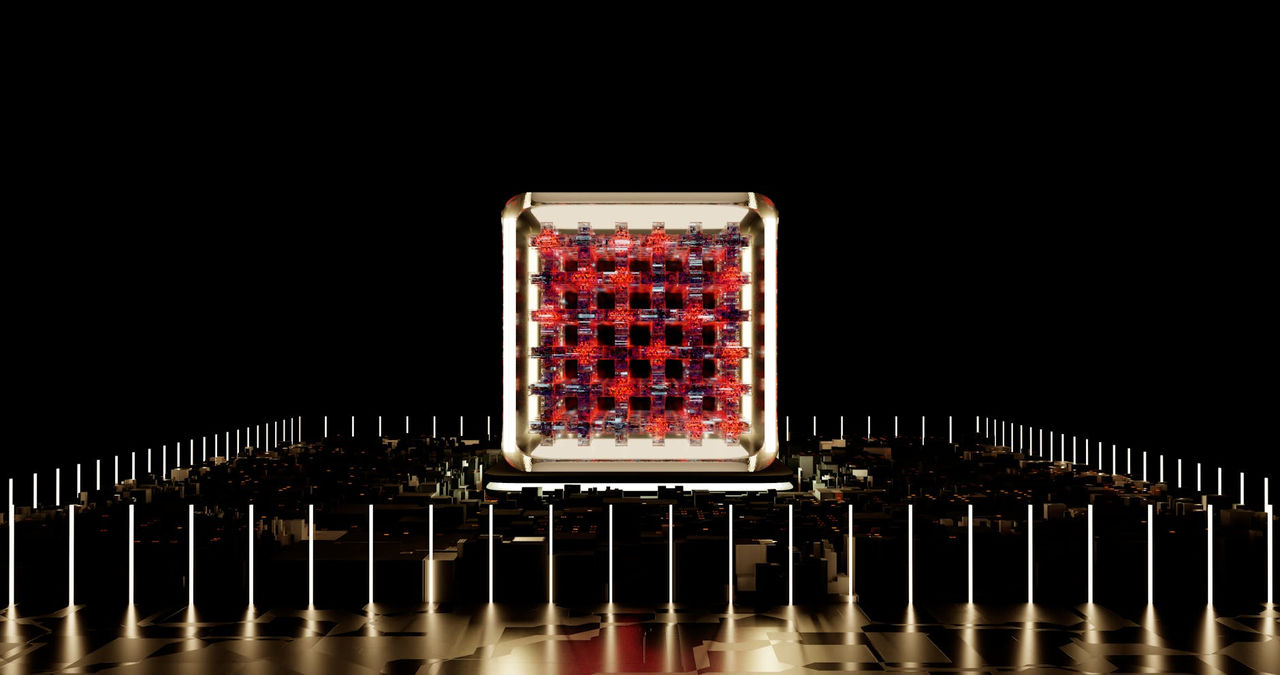
These aren’t traditional CPUs with an AI booster strapped on. The entire chip architecture bows to machine learning workloads. Memory ladders, interconnects, and execution units all bend toward neural network operations. This represents the opening salvo in the quantum-AI convergence. These chips satisfy immediate AI hunger while simultaneously forging the architectural skeleton for quantum error correction systems.
The investment tsunami reflects how seriously manufacturers embrace this shift. Companies are flooding billions into AI-optimized silicon right now, even though large-scale quantum systems linger several years distant. They grasp that these AI chips will become the command fabric for quantum processors. The hardware they sculpt today becomes the error correction engine for tomorrow’s quantum machines.
Second Wave: Quantum and AI Merge Into Unified Processors
The next hardware generation abandons the classical CPU blueprint entirely. Instead of separate quantum and classical systems, manufacturers are crafting unified processors where quantum elements and AI decoders inhabit the same chip or share cryogenic environments.
The architecture looks alien compared to conventional processors. Quantum circuits spew several syndrome measurements per second. An AI processing block sits immediately adjacent—on the same die if feasible, or within the same cooling envelope if physics demands. This AI unit devours raw syndrome data and decodes the information with sub-microsecond latency. Correction commands surge back to the quantum circuits before coherence evaporates.
Proximity determines survival. Every nanometer of distance between the AI decoder and quantum processor injects latency. Every nanosecond of hesitation multiplies the probability that quantum information crumbles beyond rescue. The physics screams for co-location. This requirement forces chip designs that would baffle classical computer architects.
Several companies are chasing this unified approach. IBM’s roadmap for the coming years includes quantum processors specifically engineered for real-time classical decoder integration. Rigetti and IonQ are exploring similar co-packaged designs. The objective remains fixed: position AI processing capability as physically proximate to quantum circuits as engineering permits.
Industry forecasts place practical fault-tolerant quantum systems roughly five years out. These timelines assume AI-driven error correction achieves production reliability. That assumption grows increasingly solid as recent demonstrations validate the concept at scale.
Why This Obsoletes Traditional Processor Thinking
The two-generation hardware transition exposes how radically computing architecture is pivoting. Companies aren’t waiting for quantum maturity to begin redesigning their silicon. They’re constructing the classical infrastructure quantum computing will demand right now, using AI chips that deliver immediate rewards.
This strategy cuts risk while maximizing flexibility. Manufacturers can flood capital into AI-optimized processors today and harvest returns from machine learning markets immediately. Those same processors become the bedrock for quantum-classical hybrid systems later. The transition flows smoothly rather than demanding jarring architectural earthquakes.
The approach also plants clear development signposts. Engineers grasp the path forward. First, perfect AI processing for minimal latency and maximum throughput. Then fuse those capabilities with quantum hardware once the physics matures. The roadmap gleams visibly and actionably.
Accelerating Faster Than Expected
Recent technical victories have compressed development timelines dramatically. Google’s Willow chip demonstrated exponential error suppression in late 2024. Quantinuum replicated similar results using trapped ion quantum systems. These weren’t modest improvements. They proved that quantum error correction scales effectively.
The field has vaulted past a critical threshold. Error rates are plummeting faster than system complexity mushrooms. When error correction capability surges more aggressively than the quantum system itself, fault-tolerant computing becomes attainable. This metric matters more than raw qubit tallies or gate velocities.
Some researchers now project the first genuine quantum advantage demonstrations might land by late 2027. These would be narrowly focused applications where quantum computers with AI error correction decisively outperform any classical system. Drug discovery and materials simulation are frontrunner candidates. General-purpose fault-tolerant quantum computers remain roughly five years distant, but the trajectory gleams clear and accelerates.
The End of the CPU Era As We Know It
Computing is penetrating unprecedented territory. Two revolutionary technologies—AI and quantum mechanics—are maturing simultaneously and melding into unified systems. This convergence is annihilating the conceptual walls that defined processors for decades.
AI has evolved beyond software perched atop traditional hardware. The technology now dictates the fundamental architecture of silicon itself. Quantum computing has graduated beyond laboratory curiosity. Quantum circuits require AI to function at all, forging an inseparable technological symbiosis.
This fusion spawns a hardware landscape unlike anything the industry has witnessed. Manufacturers must nurture two chip generations in parallel. AI-native classical processors are shipping now from AMD, NVIDIA, Intel, and others throughout the mid-to-late 2020s. These aren’t stopgap solutions. They’re foundational pillars of a new computing paradigm.
Quantum-AI hybrid processors follow in the early 2030s. When they arrive, they won’t displace classical computing but augment the technology. Quantum circuits will tackle specific workloads where they hold inherent advantages. AI-powered classical elements will wrestle everything else. The two operate as a unified organism, not separate machines.
The breakthrough in AI-powered error correction made this future viable. The advance transformed quantum computing from theoretical dream to engineering puzzle. More dramatically, the achievement shattered the architectural assumptions that have ruled processor design since the integrated circuit’s birth. The CPU as we’ve known it—a discrete, general-purpose, classical logic unit—is becoming a relic. The future belongs to hybrid quantum-AI processors that would confound engineers from just a decade ago.