
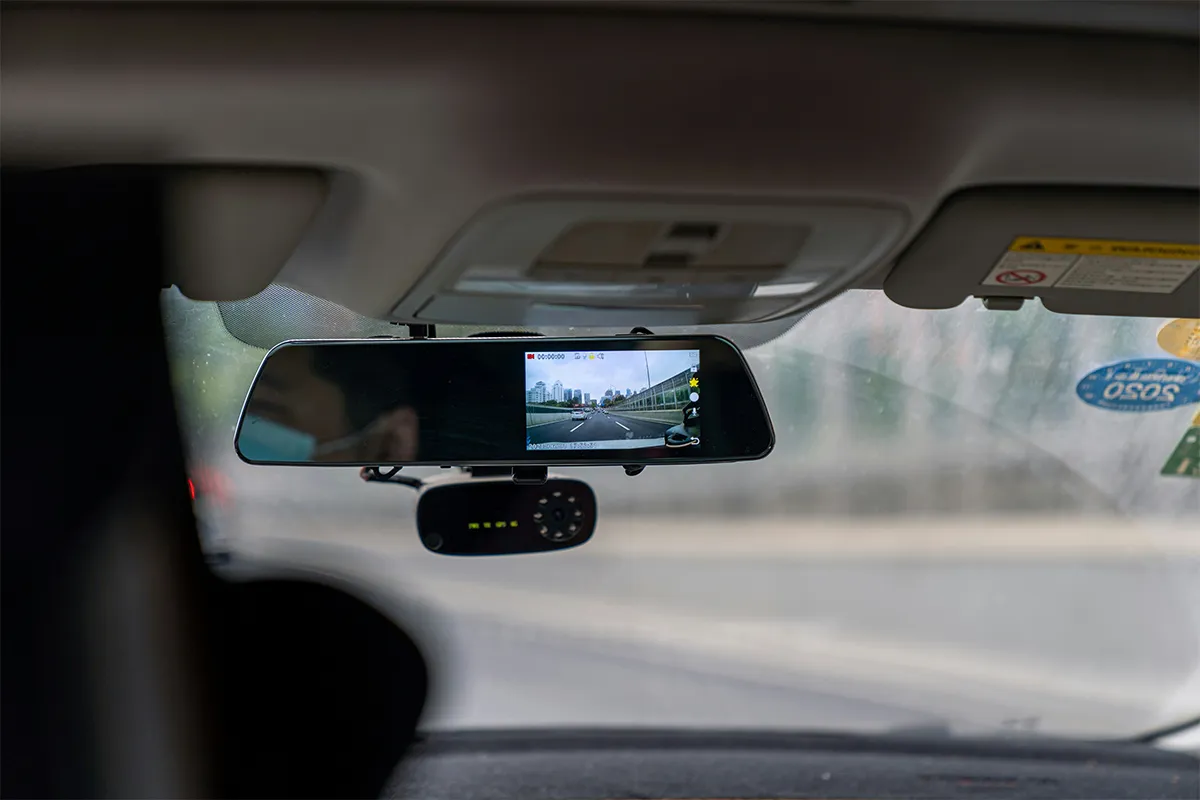
The fleet companies are always in search of better dash cams, especially those that are equipped with AI technology. AI makes it better to manage, monitor, and analyze driver behavior and vehicle performance in real time. It is easier than ever before with AI to even keep a track of data, trips, and footage, and present it precisely when needed. The WD02 AI Dashcam review is one such example of how modern AI dashcams are transforming the fleet and logistics industry with more helpful technology.
If you manage a fleet company, you would have probably come across multiple supplier lists, catalogs, websites and online stores actively promoting WD02 AI dashcam. It makes you curious whether to buy one and invest your money. The good news is that all such readers and customers have landed on the right page. This review has been written after using the actual product. It clearly states what the downsides are, advantages, limitations of the device, along with its real-world performance, features, and overall value for your fleet operations.
What Is the WD02?
The WD02 is a 4-channel commercial fleet dashcam built by Skywonder GPS, a China-based hardware manufacturer. It targets logistics vehicles, ride-hailing fleets, and specialty commercial vehicles like armored transports and sanitation trucks. The front camera shoots 1080P at 60 frames per second, with H.264 encoding, built-in GPS, and storage via MicroSD or up to a 2TB hard disk. It runs between minus 20 and 70 degrees Celsius, which covers most of what real fleet conditions throw at hardware.
- Multi-channel coverage: Four channels with AHD camera expansion let you cover the front, rear, interior, and sides at the same time.
- AI safety features: ADAS, DMS, and BSD monitor the road ahead, the driver’s behavior, and the vehicle’s blind zones simultaneously.
- Built for commercial use: The WD02 is engineered for fleet environments from the ground up, not repackaged from a consumer product.
- Rugged temperature range: Wide thermal tolerance keeps the unit running across climates, cold starts, and overnight routes.
This is not a consumer dashcam with a fleet sticker on the box. It is purpose-built for multi-channel commercial recording, and that difference shows up fast when you compare it against cheaper alternatives on a real fleet.
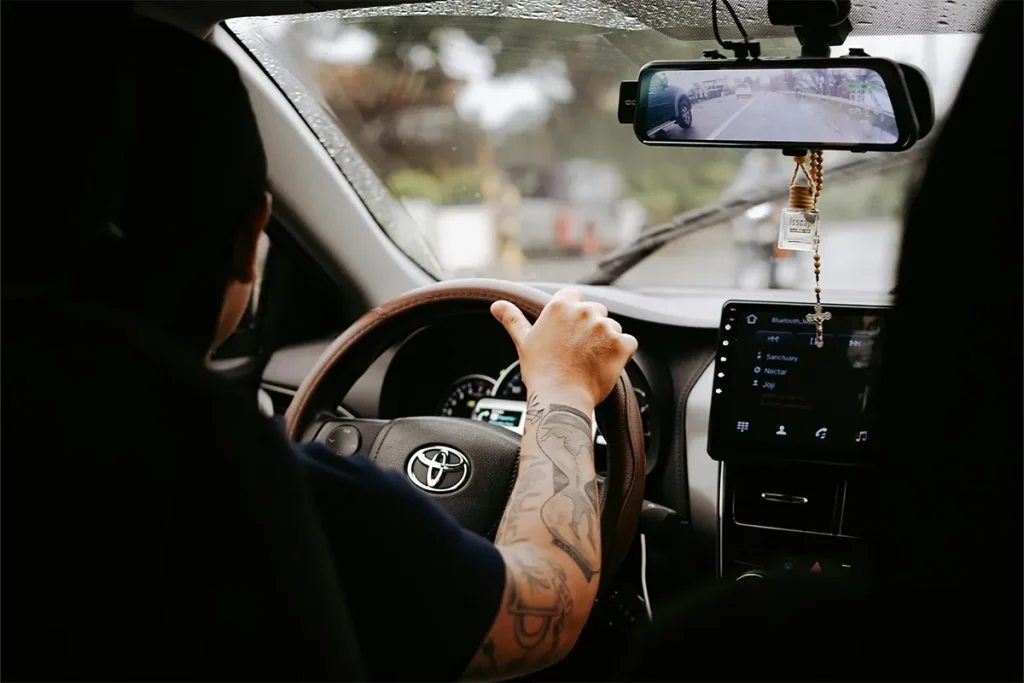
ADAS, DMS, and BSD: What These Features Actually Do
Three acronyms show up in every AI dashcam spec sheet. Most listings define them in one line and move on. Here is what they actually mean for your drivers and your risk exposure.
ADAS: This fleet driver safety system stands for Advanced Driver Assistance Systems. It watches the road ahead using the front camera. When a driver follows another vehicle too closely, drifts out of the lane, or risks a forward collision, the system sends an in-cab alert. For long-haul routes with fatigued drivers, this catches problems before they become incidents.
DMS: It stands for Driver Monitoring System. It watches the driver, not the road. Using an interior-facing camera, it detects drowsiness, distraction, phone use, and smoking. The WD02 sends real-time alerts inside the cab when it detects these behaviors. For regulated transport sectors, DMS is not optional anymore. It is increasingly a compliance requirement, and having timestamped footage of driver behavior protects you in liability disputes.
BSD: Stands for Blind Spot Detection. It monitors the sides of the vehicle and alerts the driver when another vehicle enters the blind zone during a lane change. If your fleet runs trucks or large vans on highways, BSD reduces the most common type of merge accident. It is listed as optional on the WD02, so confirm with your supplier whether it is included in the package you are evaluating.
Here is a quick breakdown of which fleet type benefits most from each:
| Feature | Best For |
|---|---|
| ADAS | Long-haul highway and logistics routes |
| DMS | Regulated transport, ride-hailing, and passenger safety |
| BSD | Trucks, large vans, and urban as well as highway driving |
4G Live Streaming and Remote Fleet Management
The WD02 has a built-in 4G LTE module, and that single feature changes how fast you can respond when something goes wrong. Without it, reviewing footage means driving to the yard, pulling the SD card, and hoping nothing got overwritten. With it, you are watching the clip from your office chair while the driver is still on the road.
- Live video streaming: Watch any camera channel in real time through the TraqCare app on your phone or desktop.
- Remote footage access: Pull recorded clips over the air without waiting for the vehicle to return or touching physical storage.
- Real-time GPS tracking: In modern AI dashcams with GPS tracking, you see where every unit in your fleet is right now, and review route history after the fact without delay.
- Over-the-air event alerts: Get notified the moment the system flags harsh braking, a collision risk, or a driver behavior violation.
TraqCare connects all of this in one dashboard. A driver triggers a harsh braking alert at 2:00 in the afternoon, and you are watching the timestamped clip before the route ends. For insurance disputes and driver coaching conversations, speed matters more than most buyers realize until they actually need it.
Video Quality in Real Conditions
The 1080P at 60fps front camera handles most fleet recording situations well. Wide Dynamic Range processing helps in tricky lighting conditions like tunnel exits, direct sunlight, and early morning glare. Night vision support extends usability into overnight routes.
The 95-degree wide-angle lens captures enough of the road ahead to document most front-end incidents clearly. For standard commercial dashcam video evidence recording, 1080P footage is sufficient for insurance claims, driver coaching sessions, and internal reviews.
Here is the honest limitation: 1080P is not 4K. If your fleet operates in situations where capturing license plates at high speed is a hard requirement, the WD02 may fall short, similar to how an AI video generator struggles with ultra-fine visual detail in fast-moving scenes. Competing units with 4K resolution perform better in that specific scenario. For most mid-size fleet use cases, however, the resolution difference does not justify the price jump.
WD02 vs. Competing Fleet Dashcams
The WD02 is not the only option in this category. Here is how it compares to the most commonly evaluated alternatives:
| Model | Channels | AI Features | Connectivity | Best For |
|---|---|---|---|---|
| Skywonder WD02 | 4 | ADAS, DMS, BSD | 4G | Mid-size commercial fleets |
| Motive Dual-Facing | 2 | ADAS, DMS | 4G plus cloud | Large fleets, coaching-focused operations |
| Samsara CM32 | 2 | ADAS, DMS | 4G plus cloud | Enterprise fleets |
| Streamax AD PLUS | 2 to 4 | ADAS | 4G | Logistics and delivery operations |
The WD02 stands out in channel count. Four channels with optional expansion via AHD cameras give you coverage that 2-channel competitors cannot match. For vehicles that need interior, rear, and side coverage simultaneously, this is a meaningful hardware advantage.
Where Motive and Samsara pull ahead is in their managed cloud platforms and enterprise integrations. If your fleet is large enough to need deep software integrations, automated coaching workflows, or compliance reporting dashboards, those platforms are built for that. The WD02 is hardware-first. The software layer through TraqCare is functional, but not in the same category as a fully managed SaaS fleet solution.
Which Fleet Types Is the WD02 Best For?
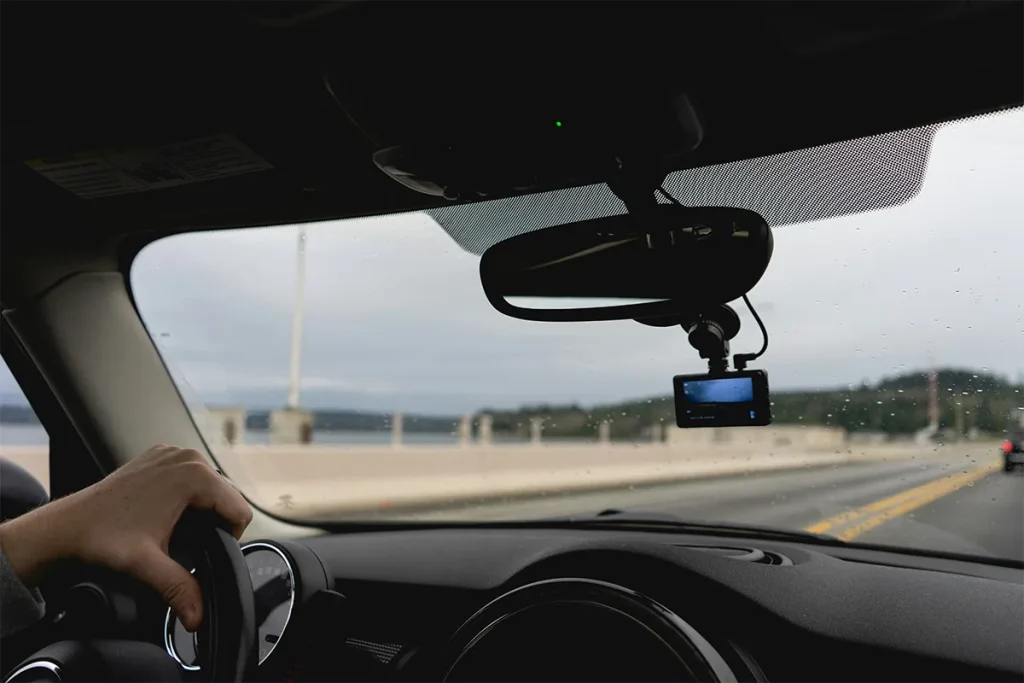
The WD02 fits best in mid-size commercial fleets that need multi-channel AI recording without paying for a fully managed enterprise platform. The hardware is strong. The fit depends on your fleet size, your vehicle type, and how much weight you put on software integrations.
- Mid-size logistics and delivery fleets: Five to fifty vehicles is the sweet spot. You get 4-channel coverage and 4G remote access at a price that makes sense for the scale.
- Ride-hailing fleet operators: DMS and interior camera support make this a natural fit for passenger-facing vehicles where driver behavior is both a safety and a liability issue.
- Special vehicle operators: Emergency services, armored transport, and sanitation fleets get real value from the rugged build and multi-channel evidence recording.
- Hazardous materials transport: AI dash cams for semi trucks and multi-camera coverage with remote footage access support compliance documentation on regulated routes where gaps are not acceptable.
- Small owner-operators: You do not need 4-channel AI hardware for one truck. A simpler, cheaper consumer unit is the honest answer here.
- Large enterprise fleets: If you need deep ERP or TMS integrations and automated coaching workflows, Motive or Samsara are built for that. The WD02 is not.
- 4K-required fleets: If license plate capture at speed is a hard requirement, look at 4K competitors first. The 1080P front camera will not always deliver at highway distances.
The WD02 holds a clear position in the market. It is not chasing the consumer buyer, and it is not trying to outdo software Motive or Samsara. For fleet managers who need solid multi-channel AI dashcam hardware without enterprise pricing, it deserves a real evaluation on your actual routes, not just a spec sheet comparison.
Is the WD02 Worth Evaluating for Your Fleet?
The WD02 is a competent, well-specified commercial fleet dashcam at a competitive price for mid-size fleets. It covers the core requirements: multi-channel recording, real-time GPS fleet vehicle tracking, 4G remote access, and optional AI safety features that reduce accident frequency and support driver accountability.
It is not trying to compete with Motive or Samsara on software. It is not targeting the consumer dashcam buyer. It sits in a specific category, and within that category, it holds up well against similarly priced competitors.
If your fleet falls in the 5-to-50-vehicle range and you need hardware-first AI dashcam coverage without enterprise pricing, the WD02 is a serious candidate. Request a demo unit, test the TraqCare integration on your actual routes, and compare the footage quality against your current setup. That evaluation will tell you more than any spec sheet.According to the Centers for Disease Control and Prevention, driver assistance technologies have the potential to reduce traffic crashes and save thousands of lives every year, as human error remains a leading factor in road incidents.